
This 98% Rated, Jumpscare-Loaded Horror Flick Is Psychological Torture at Its Peak
Credits: Umbrella Entertainment
Credits: Umbrella Entertainment
Not many movies can scare you without jump scares, but this horror flick can. Most horror movies rely on sudden shocks like Insidious, The Conjuring, or Sinister. Few achieve the psychological grip that delivers goosebumps, what this 2014 film inflicts.
Released in 2014, The Babadook announced Jennifer Kent as a filmmaker uninterested in cheap shrieks. This Australian horror film prefers quiet menace to sudden noise. It creeps forward patiently, allowing dread to accumulate like dust in an ignored corner.
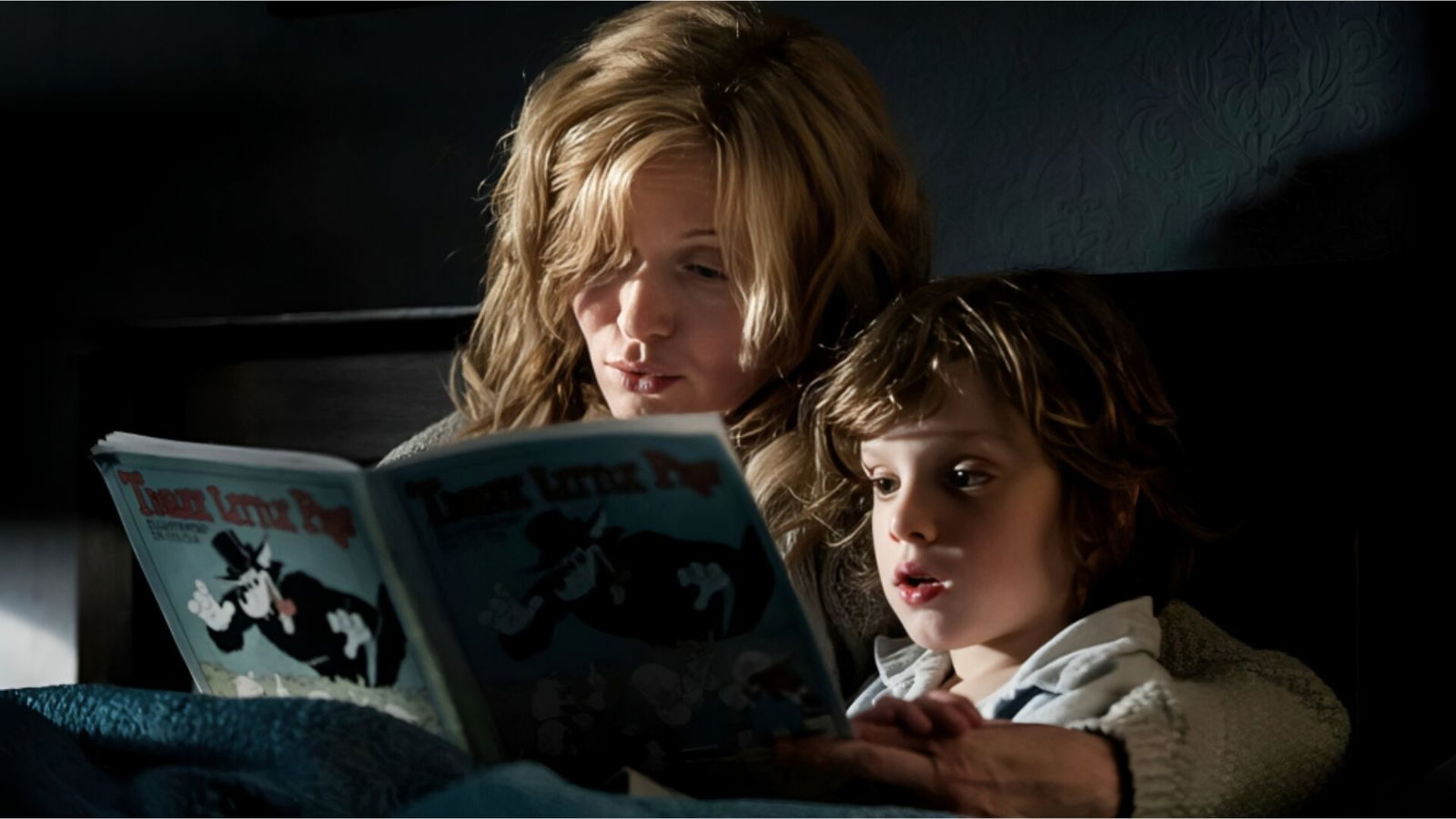
The story follows Amelia, a widowed mother, and her six-year-old son Samuel, whose birth coincided with his father’s fatal car accident. Their fragile routine collapses after the appearance of a disturbing pop-up book titled Mister Babadook. Sleep deprivation and fear steadily poison Amelia’s perception.
Gradually, the Babadook becomes inseparable from Amelia’s unresolved grief and depression. Kent visualizes trauma through German Expressionist influences, recalling The Cabinet of Dr. Caligari. Rather than defeating the monster, the film argues trauma must be acknowledged, contained, and lived with.
Gradually, the Babadook becomes inseparable from Amelia’s unresolved grief and depression. This is done spectacularly by Kent who visualized the trauma through German Expressionist influences, recalling The Cabinet of Dr. Caligari. Not to mention, while scaring the audiences out of their wits, the film also managed to teach a valuable lesson on life.
This very refusal to chase conventional horror trends helped the movie secure critical admiration.
How The Babadook took over the awards season
The Babadook did not merely unsettle audiences; it impressed juries, critics, and institutions with equal efficiency. Accumulating 56 wins and 64 nominations, it avoided the usual horror ghetto. Serious recognition, much like the Babadook in the film, arrived quickly and refused to leave.
At the AACTA Awards, the film claimed Best Film, Best Direction, and Best Original Screenplay. Horror had never managed such a clean sweep. Jennifer Kent’s authorship was later affirmed through the Byron Kennedy Award.
Abroad, approval remained enthusiastic and specific. The New York Film Critics Circle crowned it Best First Film, while Empire honored it as Best Horror. These were endorsements of craft, not novelty.
Meanwhile, actors were not forgotten in the admiration. Essie Davis collected major festival awards for her controlled ferocity, while Noah Wiseman earned critics’ citations. A 98 percent Rotten Tomatoes rating confirms the consensus: respect, not shock, fueled its acclaim.
What are your thoughts on The Babadook? Let us know in the comments!
Written by

Iffat Siddiqui
Edited by

Itti Mahajan