
William Shatner Turns Philosophical While Discussing Space and Heavy Metal With Neil DeGrasse Tyson
Imago
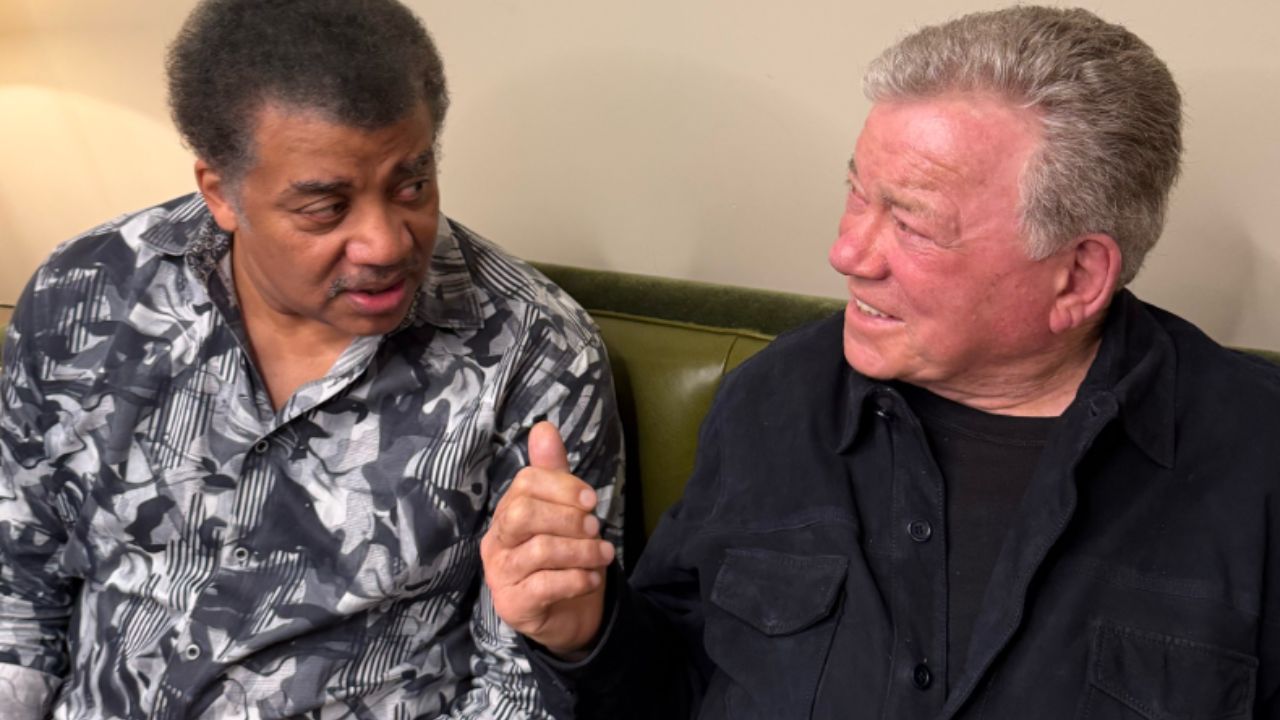
Credit: Instagram / (R) Neil deGrasse and (L) William Shatner / @williamshatner via Instagram
At 95, William Shatner is getting philosophical about space, releasing a heavy metal album, and Neil DeGrasse Tyson has thoughts about all of it. The Star Trek icon and the astrophysicist sat down for a two-night live conversation that bounced between quantum physics, planetary grief, and one very loud October surprise. What unfolded was equal parts science lecture, confession, and stand-up comedy.
William Shatner is dropping a heavy metal album in October 2026, and he wants credit for it. The project features roughly 35 metal icons, including Rob Halford and Dave Lombardo, alongside covers of Black Sabbath, Iron Maiden, and Judas Priest. He even performed a track called 'Rage live, backed by a trumpeter, at The Universe Is Absurd! event held at the Saban Theatre in Beverly Hills.
"Why does everyone approach me with a smile when they hear heavy metal album?" Shatner deadpanned during the discussion.
When Neil DeGrasse Tyson shifted the conversation to quantum physics and noted that Shatner was born in 1931, the audience applauded, prompting Shatner to quip, "I don't like being applauded for my age. Applaud me for my heavy metal album."
Beyond the album, Shatner pushed back on Tyson's explanation of quantum physics, questioning whether science had truly reached the smallest unit of everything. He used the word "entrails" to describe subatomic structure, which Tyson pointed out never appeared in his doctoral thesis. Shatner's logic was simple: scientists once called the atom indivisible, and they were proven spectacularly wrong.
Shatner the skeptic is one thing, but Shatner the grieving space traveler hits entirely differently.
William Shatner opens up about his emotional Blue Origin flight
William Shatner recounted his 2021 Blue Origin flight in vivid detail, from hydrogen venting near the launchpad to hearing the word "anomaly" mid-countdown. Upon landing, he wept uncontrollably in front of Jeff Bezos and international cameras. He later understood those tears as grief, not joy, stemming from years of witnessing environmental destruction across the planet.
Shatner also argued that Mars exploration requires human consciousness, not robotic efficiency. Neil deGrasse Tyson summarised it cleanly: nobody has ever named a middle school after a robot. At 95, Shatner is clearly still processing what it means to be a human hurtling through an increasingly fragile universe.
What are your thoughts on William Shatner's reflections on space and heavy metal? Let us know in the comments.
Written by

Shraddha Priyadarshi
Edited by

Aliza Siddiqui